A Case Study on Using AI to Bridge the Gap Between Limited Budgets and High-End Results.
The Challenge: Traditional design cycles are often a barrier for lean startups, turning essential research, UX/UI and strategy into "luxuries." When this client approached me, their budget and timeline made traditional delivery impossible. I saw an opportunity to challenge myself and test a new thesis: AI as a force multiplier.
Methodology: I utilized AI to accelerate secondary research and complex ideation. My approach emphasizes cautious AI integration; using technology to handle the heavy lifting while I provided the strategic oversight and verification necessary for a professional result.
The Result: A high-tier design system and a strategic blueprint that allows Melo Vault to scale independently, minus the enterprise price tag.
Methods & Activities
-
User Interview
-
User Research
-
Service Design
-
Design Thinking Workshop
-
Data Visualization
-
Policy Advice
-
User Journey Mapping
-
Service Blueprints
AI Tools
-
Secondary research:
-
ChatGPT 4
-
Gemini 2
-
Perplexity Sonar
-
-
Prototyping
-
Figma
-
-
-
Synthesized and analyzed data
-
Formed an ad-hoc team to visualize patterns
-
Led brainstorming sessions for communication artifacts
-
Created service blueprints and journey maps
-
Facilitated design thinking workshops
Project Success Highlights
Reducing project length by 12%
Through early SME engagement we reduced the project length by 4 weeks for 6 teams, and boosting ROI by $240K via workforce optimization.
White House Debriefing
Research findings were presented during a White House debriefing, spotlighting user pain points across the service journey.
Policy insights that impacted 12M lives
Identified 48 themes, 9 key insights, and proposed 25 policy recommendations for new services to support 12M beneficiaries.
Secured Renewal Through Visual Storytelling
Secured contract renewal by turning insights into visuals, summarizing
findings from 108 interviews and 12k responses.
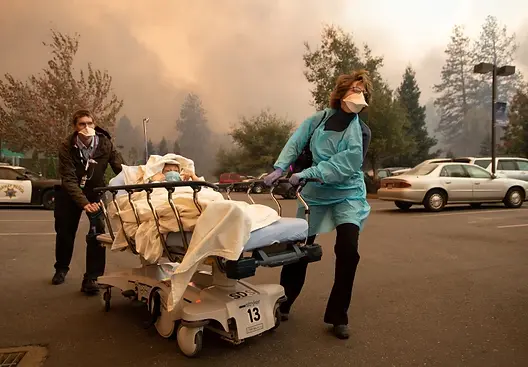
66.3 million rural Americans face critical gaps in access to life-sustaining medical equipment during public health emergencies.
The Process and the Outcome
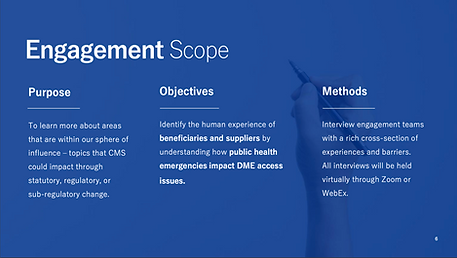
Refining the Project Scope
We interviewed 12 experts, analyzed the insights, and created three proposals. All topics were important, but we guided the client to focus on the one most urgent today: how public health emergencies, like COVID-19 and climate-related disasters, affect access to essential services and medical devices for beneficiaries.
Optimizing the Project Timeline
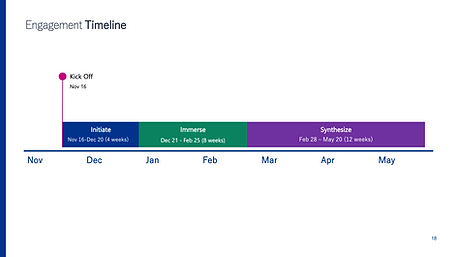
We evaluated the prior engagement in the same contract, and involved subject matter experts early in the development of the research protocols. This approach saved four weeks across six workstreams and generated $240,000 in ROI by accelerating alignment and optimizing team deployment.
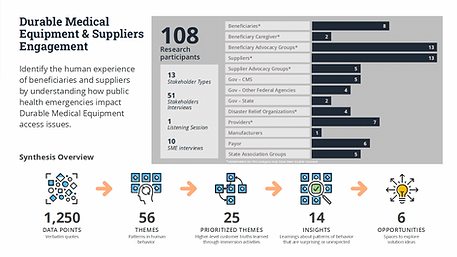
ٍProject Summary Report Sheet
As shown in the slide, we interviewed 108 participants and used AI to collect verbatim quotes, resulting in 1,250 data points, which we synthesized into 56 themes, 14 key insights, and 6 opportunity areas for service improvement.
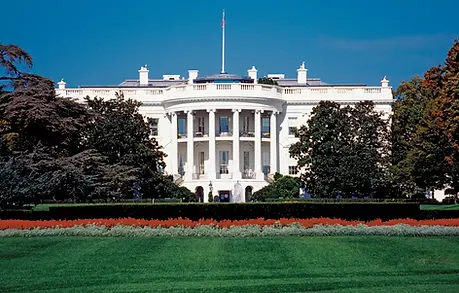
Contributed to White House Debrief Highlighting Critical User Pain Points Across the Service Journey